The Conservation Office (the Office) offers internship opportunities for students studying cultural heritage conservation, allowing them to apply academic knowledge in practical settings, gain hands-on experience, and engage in technical and cultural exchanges to help nurture the next generation of conservation professionals. From 1 June to 20 August 2026, we hosted a 3-month internship for Miss Susanna Herbst, a student pursuing a degree in Conservation and Restoration at the University of Applied Arts in Vienna, specialising in the conservation of paintings. She demonstrated a strong dedication to developing conservation techniques for easel paintings and a keen interest in East Asian culture.
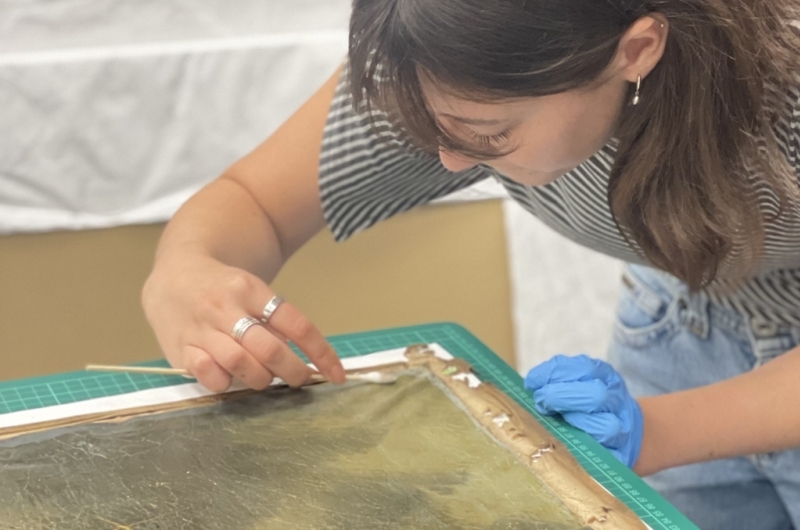
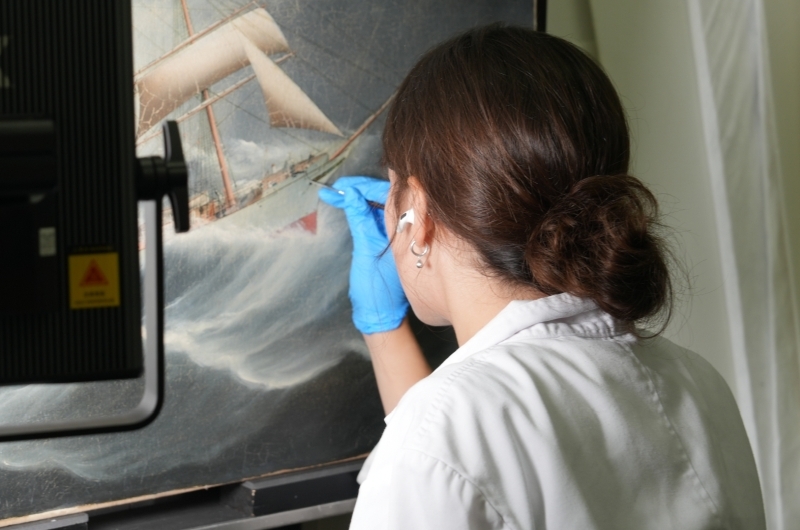
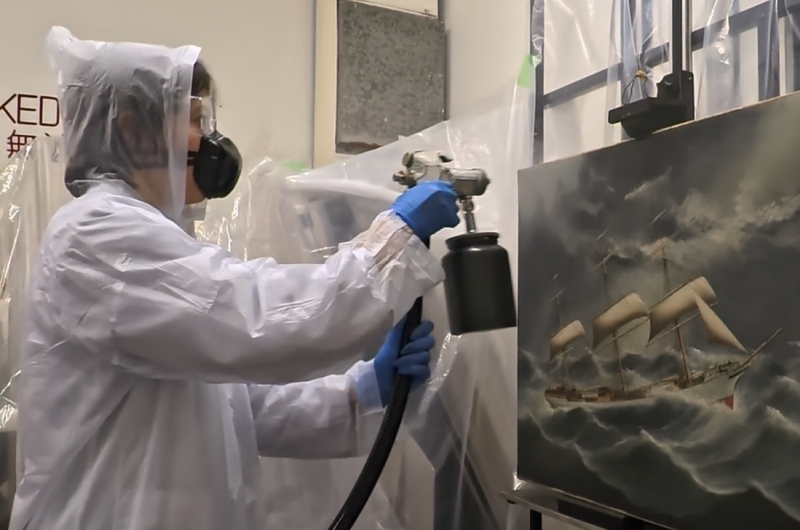
During her internship, Susanna participated in a range of projects, including object treatments, scientific examination, and exhibition support at the Hong Kong Museum of Art. Her hands-on restoration work focused on a newly acquired 19th-century China Trade oil painting, involving surface cleaning, removal of aged varnish, flattening, strip-lining, re-stretching, infilling, pictorial integration, and re-varnishing. She began by developing a customised treatment plan based on extensive literature review and material testing, then carried out the restoration process, successfully stabilising the artwork to a condition suitable for exhibition. Prior to each treatment stage, Susanna conducted tests to understand the rationale behind the chemicals and materials used, adapting her approach to the specific needs of each painting. She also applied the thread-to-thread reweaving technique to mend tears on another small China Trade oil painting. This meticulous and time-consuming method is known for effectively reinforcing the structural integrity of torn canvases.
In the area of scientific examination, Susanna carried out Infrared Reflectography (IRR) and Ultraviolet Fluorescence (UVF) to examine the underdrawing and varnish condition of the paintings respectively and gained insight into how Macro X-ray Fluorescence (MA-XRF) supports pigment analysis and the comparative study of materials used by Chinese and foreign painters in 18th- and 19th-century China Trade oil paintings. These techniques are instrumental in documenting and analysing the condition of cultural objects, informing conservation strategies, and facilitating scholarly study.
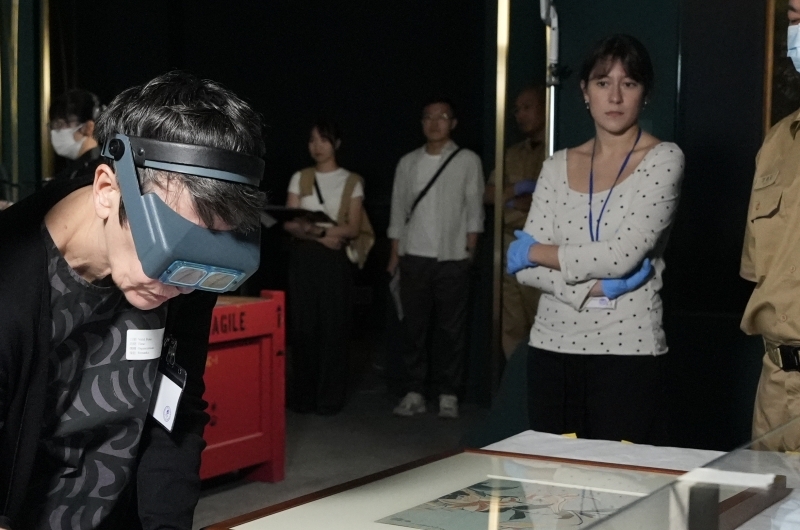
As this was Susanna’s first time working in a museum environment, she greatly valued the opportunity to contribute to exhibition support. Through collaboration with professional teams, including curatorial and design staff, she translated theoretical knowledge into practice, gaining insights into the balance between display aesthetics, object safety, and security measures. This experience broadened her understanding of how to reconcile the preservation needs of cultural heritage with the visitor experience.
Throughout her internship, Susanna engaged in a broad spectrum of conservation and behind-the-scenes museum work, consistently demonstrating a meticulous, conscientious work ethic and a proactive attitude toward learning. It is hoped that these experiences have further strengthened her professional skills and will support her continued contribution to the field of cultural heritage conservation.